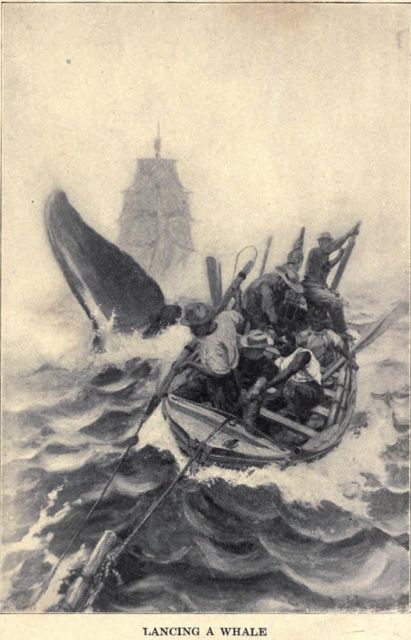
“And so Perth went a-whaling.”
Moby Dick, Chapter 112
Just to clarify: I have not gone a-whaling, but I have gone to the antipodes. In this first blog I’ll give some background to the venture. For those of you more interested in tales from New Zealand (henceforth NZ) and less so in my meandering career please feel free to skip ahead.
About 2 years ago I reached the conclusion that there were parts of my job that I didn’t care for at all (microscopy, lab work, sitting at a computer for hours…) and that if I became more senior these undesirables would account for an increasing proportion of my working hours. The situation seemed bleak, but then I remembered a lesson from The Selfish Gene (by Richard Dawkins). The chapter discussed a single celled protozoan with a flagellum (looking like a tail in the shape of a corkscrew) at one end which, when rotated clockwise, propelled the little fella along. It navigated by “tasting” its environment at the head-end and at the flagellum-end, and if it was in search of sugar for instance, then provided it sensed a greater concentration of sugar at the head than at the back, then it would “conclude” that there were better feeding grounds ahead and would continue going forwards.
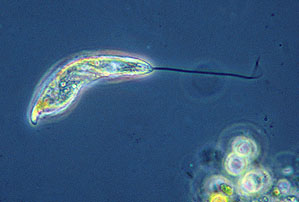
But what if Fred (I’ve named him) detects with horror that the concentration of desired solute is falling? He’s got no rudder and the flagellum is only “designed” to propel Fred forwards. However, ingeniously Fred sets his flagellum to spin anticlockwise anyway, which doesn’t reverse him, but does cause him to tumble around chaotically. Choosing a new trajectory at random Fred sets off again, and again tastes his environment to see if this path is more promising. In short, if Fred’s life is not getting consistently better he makes a radical change and then reassesses the situation.
I like to think that my life and career choices are more complex than Fred’s, but his doctrine of “if it’s not going well then shake things up and see where you are then” was still an inspiration.
Quitting medical specialty training is quite frowned upon however, so I didn’t make the leap right then but instead took 6 months out of training to work as a palliative care reg. I enjoyed the change and learned some new skills, but I missed the part where we try to cure the patients so I didn’t go down that route. But I didn’t go back to haematology at King’s either. This time I did quit, and handed back the training number ( LDN/073/7040516/C ) that I’d worked so very hard to attain in the first place.
My intention was to locum for about 3 months, then go travelling and decide what to do for a job afterwards. Some thoughts were:
Perhaps do some maths tutoring and if I take to it do a PGCE
Psychiatry maybe.
To my surprise I enjoyed haematology much more as a locum. If the department is advertising for locums then it’s because they’re awfully short staffed, so when a functioning doctor arrives everyone is delighted and welcoming.
Another shift I enjoyed was that, since I was no longer a trainee, my employer was under no obligation to train me. In my training post I had to report dozens of blood films, attend morphology lectures (often outside of working hours) and present papers on the mode of action of the latest immunotherapy, none of which interested me at all and it was a complete wast of the tax payer’s shilling trying to teach me.
My new employer (Exeter NHS trust) just wanted to get their money’s worth, so put me to things that I was reasonably competent at and enjoyed doing, like bone marrow biopsies, clinics and ward rounds.
The plan to go travelling after 3 months was scuppered by the pandemic, so instead I continued locumming and considered my options.
If you’re still with me dear reader, perhaps you’re wondering “why didn’t you just continue locumming since it’s so great? Why look for work in NZ?”.
Well, as a locum you aren’t really a piece of the department. You’re just filling in for the time-being, and if they find someone permanent to replace you, you can be dismissed without warning. Also, as a temporary employee it’s difficult to make any changes to the way things run or to take a long-term view since you won’t be around to carry any of your initiatives forwards.
I chose to go to NZ in part because it was something I couldn’t possibly have done if I’d remained in my training post. So it would not only make my old colleagues jealous, but also help validate taking the road less traveled.
Without much difficulty I found a vacancy in Palmerston North (see below), for a haematology registrar, 1 year service provision. Pretty much the same as the job I left in King’s I thought, except everyone who’s been to NZ tells me working in their health system is much nicer than in the NHS. Plus I’ll be in NZ. So I applied and had a phone interview. The Consultant interviewer only seemed interested in establishing when I could start work and whether I had any family in tow who might queer the deal. When I told her I was quite, quite alone she offered me the job at once but then quizzed me on what aspects of my job I did and didn’t like, and my career aspirations. I did my best to answer honestly whereupon she recommended that instead of this post I apply for another job “which I think would suit you better, and also serve the region better”.

I liked the idea of “serving the region”. Also several other aspects of this new job appealed to me, but to list them would seem tantamount to bragging.
- New Plymouth (see above) is on the coast, and in the shadow of Mount Taranaki (see below).
- Working in an out-patient chemotherapy department I’ll be treating not only patients with haematological cancers but also patients with solid cancers. (And none of the boring bits of haematology. No tedious coagulation issues or haemaglobinopathies). I made it clear at interview that I had very little experience with solid cancers, but I was confidently told “you’ll pick it up”.
- I and one other doctor will be jointly in charge of the day-to-day running of the department. Consultants will be available by phone and will visit once a month to do clinics.
- Working hours are 9am-5pm, 4 days a week, no unsociable hours.
- I have a study budget that can be used for flights (provided there’s some conference or course at the other end).
- And it isn’t a 1 year contract. It’s permanent.
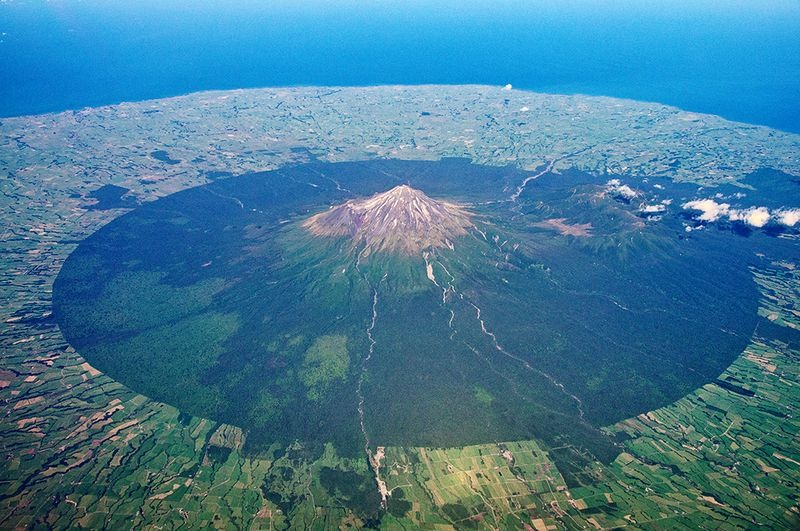
Early on in the second interview one panel member told me “Taranaki is beautiful. I’ll take you cycling and show you around once you’re here”.
Interviews have not been my strong suit historically. This time I can’t help wondering if all of the new border controls have left NZ’s health system with a supply and demand problem that has worked to my advantage. Either that or I have fallen for the same trap as young Martin Chuzzlewit when he is persuaded to buy property overseas, and on going out there to make his fortune finds he’s been played for a sucker.

Thanks for reading this far. The rest of the story will be set in NZ I promise (aside from the occasional long rambling aside).
Next update in about a week. Probably.

 Edd Whewell: the New Zealand years
Looking forward to tales of far-off lands and the wonderful things to be found there.
LikeLike
All the best Edd, look forward to hearing more. Xx
LikeLike
Superb start to your blog, Edd. Continue like this, and you’ll be publishing a book in 2023.
LikeLike
Thank you for the enticing preface. Thinking with pleasure of you dangling bat-like from the surface far away underfoot where the wild things are… and anticipating the exploits of our fabulous flagellate friend frEdd with bated breath
LikeLike
Do you think I’ve come to NZ as a fire-brand preacher or did you just wanted to alliterate 4 words beginning with f?
LikeLike
Well well well Whewell! When winsome worthwhile warranted Ws work wondrous well when wandering wordily, wherefore worry – why would I wish to wrangle with worrysome woebgone Fs?
As to fire-brand fervour,fearless frEdd – preach on
LikeLike
Eddy, I so enjoyed your narrative, especially as it’s illustrated with stunning photos, paintings, and map. I’m so looking forward to the next instalment. F x
LikeLike
Loved reading this!
Looking forward to finding out which camper van you go for x
LikeLike